Monday, July 28, 2014

Will Yokeley Summer 2014

I can’t help but feeling like the past month is an experience that will impact me for the rest of my life. Seriously, I’m incredibly thankful for the opportunity to live in and get to know Roatán. It´s like a friend that you become really close with in a short period of time and you can´t help but to just be thankful that they were a part of your life. That´s how I feel about Roatán. From my islander friends (like Kenfor shown below) to the awesome American and Canadian volunteers who work at Clínica Esperanza, I met a ton of people who were so much fun to be around. Most of the volunteers were med school, nursing or pre-med students (and some doctors and nurses too), and being around them made me even more excited to get on the path towards a career in medicine because they were all so down to earth, caring and passionate about helping others. Couldn´t have asked for a cooler group of people to work with!
My bro Kenfor
My bro Kenfor
Since I´ve gotten home, a lot of people have asked me how my experience was working in the hospital and what kind of things I was able to do there. Obviously I wasn´t giving treatments to people or diagnosing them since I´m not a doctor, but I got to be a part of every other aspect of a patient´s doctor visit. My co-intern and I were always the first people in the clinic to see patients each day, and after their long waits each morning (anywhere from 2-4 hours sometimes), we were always eager to get them into the clinic for triage just so they knew we´re doing our best to see everybody ASAP! But the attending pediatricians, Dr. Chantry from UC-Davis and Dra. Cerritos from Honduras, worked hard to see anywhere from 10-15ish patients every morning. There´s Dr. Chantry and her daughter and niece with me in the picture below.
Dr. Chantry, Zoey and Sabrina
Definitely my favorite part about volunteering at Global Healing was working with the kids everyday. Not only did I learn to tune out a crying baby, but I also got to know some pretty awesome Honduran niños! A lot of times parents would bring all of their kids to the clinic in addition to the one who was sick, and most of the time those healthy kids wanted to do something…anything. They were probably so bored of sitting around at the hospital! So Zoey, Sabrina and I would give them some paper to draw on, we would read with them sometimes and Sabrina even made a poster and taught kids about the importance of brushing their teeth (which deserves emphasis because many kids came into clinic with cavities). I especially loved having older kids come into clinic because it’s fun to talk to them and see how they’re feeling instead of immediately asking the parent. Some of the kids would be shy and just look at their parent for answers, but some of them would be pretty chatty, like Keylin who’s in these pictures.
Keylin      Keylin 2
Global Healing is really doing some great things in Roatán! There were 10-15 patients everyday who would not have gotten medical care if it weren´t for the clinic. In addition to that, sustainability is always a big question with these medical mission projects, but that is taken care of at the clinic since we have Dra. Cerritos working there throughout the year. And all the families loooveee Dra. Cerritos by the way.
I learned so much about healthcare during the month I was there, and especially healthcare in an under-served área. It really is so much different than healthcare here in the states. There is a lot of need in Roatán, as there is in much of Central and South America. Healthcare is just one aspect of the need, but healthcare is also something that effects the total well-being of an individual in ways that no other service to someone can do. Volunteering in Roatán helped me to see that first hand.
By the way, I also ended up getting a little bit of a bonus added to my trip when I found out they have little league baseball on the island! They had games every Saturday and the kids are pretty good ballplayers. I got to hang out with them a few times and they even let me pitch to them at a game, which was a lot of fun!
At the little league field
Pitching at the little league field
Being in Roatán was one of the best experiences that I´ve had. And just to wrap all this up, I´m very thankful that I had the opportunity to volunteer and learn there. Roatán definitely gave me much more than I was able to give to the island, and it will always be a special place to me. Thanks for reading my post, and if you´re interested in learning more about Global Healing then check out the link below!

Wednesday, July 09, 2014

Emily Carey Summer 2014

My experience on Roatan was unforgettable, but in a way I could never have imagined before I got there.  As a pre med student with a love for learning the Spanish language, I knew this trip would be an amazing experience.  When I arrived, I’ll be honest I was a little bit scared – I had no idea what to expect! Ms. Peggy picked me up from the airport and brought me to the beach house where I would be spending the next month. That night, some volunteers came over to our house to cook baleadas, a staple in the Honduran diet. Everyone was so friendly and welcoming; my fears were immediately assuaged and I knew that this would be an extraordinary month.

Naturally, I was nervous for my first day of work. When I cabbed to the hospital with Genevieve, the nurse practitioner I would work with for the month, and other volunteer doctors, my nerves were again alleviated as I quickly realized just how amazing these women were.  Genevieve showed me around the hospital and the doctors taught me about some interesting diagnoses as we worked through the patients for the morning. I headed to Clinica Esperanza in the afternoon.  There, I was translating for some of the nurses who did not speak any Spanish. My Spanish was definitely put to the test, but I loved every minute of it. Explaining instructions for birth control pills, or picking out the right glasses for a patient is not the Spanish I was used to speaking in my university classes. But I worked my way through it and I returned home excited for what the next day would bring.

            As the first week went by, I explored the island a little more and began to get used to triaging patients. I made friends with a little girl named Neli, whose brother, Junior, was at the clinic for neurological problems. I drew pictures and played with the two of them as the doctors spoke with their mom. The next time they came in they were so excited to see me, and their mom told me they wanted to learn English after meeting me. This was really moving. I loved making connections like this with the patients, and this was only the first of many.

Neli and I at the hospital


A patient and her mom sporting their new butterfly tattoos

Finally a patient that didn’t scream on the scale!

Clinica Esperanza Triage

            The kids at the clinic absolutely loved the donations that I had brought. Most were just small balls, or stickers that we would give to the patients after seeing the doctor. The little boys loved the toy cars and their faces lit up when they realized they could bring it home with them. Many times, they would offer to give it back, but when I explained it was a present, they were delighted. One day I sat and put temporary tattoos on with a patient waiting to see the doctor. We ended up putting one on her mom, her grandmother and some other patients sitting in the hallway waiting. Putting that smile on the patients’ and parent’s faces was a truly special feeling, but realizing that sometimes this might be their first and only toy was heartbreaking. So many children in the US have piles of toys, but these boys and girls barely have crayons. We take these things for granted as kids and as adults, but such a small thing can make such a big difference. These children simply learn to play with what they do have, and sharing is never questioned. I learned to truly be thankful for everything I am blessed with at home in the United States.

Using my Spanish every day was a fun experience for me. I’m by no means fluent, and I’ve always been a little behind in my speaking skills because I was so afraid to make a mistake. Listening always came easy to me, and writing I could simply look up what I wasn’t sure of. But this trip finally made me realize that making a mistake while you’re speaking to a native is okay. They will always understand what you mean and appreciate that you are trying. Leaving Roatan I feel more confident in my Spanish skills. I loved learning Spanish from patients. If I couldn’t understand a word he or she was using, I would ask for an explanation. This way, we both worked out the meaning of the word, occasionally through a few laughs, and I could add a new vocabulary word to my list. I also loved it when patients would ask me about English words. It was fun to teach and it was great to see the patients’ desire to learn.

Although of course more upsetting, young patients who came in with rare, severe cases were the most interesting. Working with young children and babies allowed me to see various medical problems that are so easily preventable in the United States. Sometimes we’d see little things, like a little girl with a marble up her nose, or a fever and a cold. However, the babies born septic, the boy with a rare genetic disease, or the child with spina bifida, are the patients I’ll always remember. Many of these cases could have been prevented in the US, simply due to more sterile conditions or availability of resources and proper care. Sometimes I was also saddened to see parents’ serious lack of education. This lack of basic medical knowledge meant many children were missing out on proper care because their parents did not understand when it was necessary to see a doctor. This is definitely something that can be prevented with a more intense education program put into place for expecting mothers.

            Roatan is an interesting place. Because of the diving tourism, there are parts of the island that are well established, with resorts and shops. The rest of the island lives in poverty, however, and it creates an interesting dynamic. Volunteers are well respected on the island and the locals really appreciate the “gringos” helping out. It is quite surprising though how isolated and unaware the tourists are of the poverty plaguing the island. It seems if more of the diving tourists understood the conditions of the hospital perhaps they could help in some way. Of course, the tourism itself is helping the island, but it is terribly unfair how severely separated the island is. Perhaps if tourists were more aware of the conditions in the communities and the lacking healthcare system, word of mouth would allow more Americans and Canadians to travel and volunteer their in some way.  Roatan is a beautiful, vibrant place but I’m not sure visitors truly understand the hardship and impoverishment that exists throughout the island.


I feel very blessed to have had such an amazing opportunity to meet and work with such truly amazing people. The Hondurans living and working on Roatan are some of the kindest, most genuine people I’ve ever met. The nurses and doctors are incredibly talented and passionate, and I am not sure they get enough credit for it. My last day of work, some of the nurses and doctors were sad to see me go. I’d made a connection with these people and I’ll never forget them. In fact, I hope to return to Roatan as soon as I can, maybe next time with an M.D. next to my name.

Sunday, January 05, 2014

Amanda Journal #5

all the small things

I’ve been here for three months. It’s been a big three months. But today I want to think about all the small things. These are the simple, important, amazing things that together have made this experience so big for me.

Organizing patient files and learning the importance ofdecent, legible handwriting. It really is important to the time to write a person's name and their history so that the next person who touches the file can understand what happened... I know it's kind of a long-standing joke that people who work in healthcare have really bad handwriting, but seriously folks, decent handwriting really goes a long way.


Handwashing. I spent a day teaching all the kids (and their parents) who came through the clinic how to properly wash their hands and the importance of handwashing. These big bottles of hand sanitizer were purchased through a very generous donation and distributed throughout the hospital. The hospital staff was so grateful – There are few places in the hospital to wash your hands and the running water doesn’t always work. This donation was so important to the hospital!

in the pediatric ward

in the maternity ward

in the dengue clinic


Weighing and measuring with accuracy. This is one of those things that I do over and over and over again all day at the hospital. Weigh and measure kiddos. But these numbers are what help the docs determine if kids are healthy, if something is not right, how much medication to prescribe… height, weight, temperature, head circumference, these are important numbers that have to be accurate.


Cleaning supplies. These were another donation that has made a big deal. When I got here we were running out a of this. Thanks to this donation, we have not had to spend money (that is not so easy to obtain) to purchase more cleaning supplies, and there will still be some here to use for a few months after I leave.

 
All the little touches. A cover for the baby scale. A bookshelf to hold books and informational pamphlets for families to read while they wait to see the doctor (and, as I’ve said before, they wait hours and hours). These are the things that seem small, but a lot of work and love and kindness of friends and strangers went into making them available for this clinic.


I am so thankful for the small things.

Wednesday, October 30, 2013

Amanda Journal #4

go with the flow

A piece of advice that is often given to travelers is to learn to be very flexible. Often things don't happen on time. Or they don't happen at all. Or they happen in a round-about way that doesn't seem to make any sense and takes a lot more time and maybe doesn't produce the results or arrive at the destination you were looking for but you just have to go with the flow.

While living in Brazil, I learned that when people want things to be done at a specific time (for example, a business meeting), they request that it be done on "American time" (as in, like a person from the United States would do it). It was not uncommon for both students and professors to show up half an hour late (or more... or not at all) to classes. When someone says they'll be there soon, usually that means within the next hour or two, not the next five minutes. Sometimes the bus doesn't show up. Sometimes the metro is broken down. Sometimes there is a strike or a holiday so everything is closed for three days (or more).

It's good to learn to go with the flow, to be able to adapt and figure things out when things don't go exactly as planned.  The idea that "time is money" is pretty deeply ingrained in our culture, and don't get me wrong, I like to have my schedule just as much as any other gringo (you should see my day planner from college... yikes!), but traveling has definitely helped me learn that a schedule can't rule my day or my life.

But how does that translate to healthcare?

In both clinics that I am working in here on the island, appointments are not scheduled at a specific time. You can set up an appointment for a specific day, but you still have to make sure you arrive early enough that your "spot" isn't taken. Dra. Cerritos hands out little tiny signed slips of paper with a date written on it. Patients/parents come back on that day and turn in that little slip of paper to the receptionist, who then gives them an even smaller piece of a paper with a number written on it. That represents their place in line to see the doctor. The doctors only see a certain number of patients every day (Dra. Cerritos sees 15) so if you are not here early enough, you don't get to see the doctor. I have talked to parents who have come as early as 6 in the morning to ensure that they are seen by the doctor. I don't start triage until 8:30. Dra. Cerritos doesn't usually arrive in the clinic until around 10:30 (She works in maternity in the morning with the new mommas), and sometimes it is even later than that. So families are waiting in the heat for literally hours to see the doctor.


I can't tell you how many times a morning parents peek their head in the clinic to ask, will the doctor be seeing patients today? What time does the doctor show up? And I cringe because I have to answer, "Well... usually she's here around 10:30, but sometimes she gets here as early as 8:30 or 9..." More than once, emergencies have come up in the maternity ward and she has had to rush off. In these cases, I have to work up the courage to step out into the little waiting area and tell the parents who have been waiting for hours in the heat with their hot, sick, crying kiddos that the doctor will not be able to see you today. I am so sorry.

The inconsistencies are really tough, and this goes beyond the scheduling. One day, the electricity went out. I was reading babies' weights with a flashlight. And with the electricity, we lost our air conditioning (Global Healing has provided an air conditioner that we get to use inside the clinic). So instead of stepping into a refreshing clinic, families stepped into a hot, dark room with a sweaty volunteer (me) to measure their kiddos. Another day, a different lock had been used to lock the clinic, so I spent all morning looking for the key and started triage late. The first week I was here, we ran out of paper towels so I had to use gauze to wipe down the clinic at the end of the day (PS thank you ALL for those donations.....I have never been so excited for disinfecting wipes). One morning I spent half an hour chasing a tarantula out of the clinic. Yesterday, I showed up at the hospital to find out that the specialized doctors had gone on strike after not receiving their pay. All of Dra. Cerritos' patients were turned away by the receptionist, which shouldn't have happened -- She is part of the hospital staff, but her salary from the pediatric clinic is paid for by Global Healing.

I've said it before, but to my foreign eyes all of this can feel a bit chaotic. It is good to see some of these inconsistencies alleviated by Global Healing. Today, thanks to the consistent paycheck from them, we will be able to see 15 patients while the other pediatric doctors do not.  As far as all the other surprises, I guess I'll just keep going with the flow.

Amanda Journal #3

doctors on strike

For the last two weeks, doctors who work for the public sector have been on strike here in Honduras. More than 700 doctors from 27 public hospitals around the country are demanding pay they have not received since the earlier this year.  The strike was called by the Colegio Médico de Honduras, which is like the association for doctors. They are demanding that these doctors be paid back pay, paid for the time that they have been on strike, and receive an increase in pay. 


ElHeraldo.hn

Last week, the Honduran government declared this strike illegal, saying that the doctors' association did not follow the correct procedures to declare their frustration to the government. The president questioned the ethics of these doctors, saying that those who are suffering most from this strike are the Honduran people who are missing their appointments. The doctors, while agreeing that the Honduran people are absolutely taking a hit by the strike, responded by saying, "We doctors have to eat, too."

The strike is complicated; the in's and out's are a bit confusing due to lots of finger pointing and questions about who's to blame, if the government has money to pay, etc. etc. Everyone is clearly frustrated. What I think is important to emphasize is that this is not the first time this has happened here. Apparently, this happens all the time.

I work with a doctor who works at the public hospital in the mornings as an emergency room doc (the emergency services are still running, thank goodness) and at Clínica Esperanza in the afternoons. When I asked him about the strike he told me, "We have to go on strike. We have to go on strike any time we want to get paid." He hasn't been paid in over six months for his work at the hospital and that this happens all the time; they go for months without pay, they go on strike, they get paid (usually just their normal salary - no increase for their paycheck being late or anything like that). Some people have been without some or all of their pay for as long as a year. 

My response when he told me this:  WHAT!? How do they live??

He said a lot of doctors build up a ton of credit card debt because that's what they have to live on while they wait. He's lucky enough to have another job in a private clinic, so he can always have some income. Some doctors do the same, work in a public hospital as well as a private one, but some do not. 


ElHeraldo.hn

Early last week the government told the doctors' association that if and when this is resolved, there is no money to give them any increase in pay whatsoever, and that they will not be paid for the days they have been on strike. 

Oh, by the way, last Tuesday, the Honduran national soccer team tied Jamaica, qualifying them to go to the World Cup in Brazil next summer. It was a crazy night -- we went down into town to watch the celebration. The president of Honduras declared the following day a holiday for everyone who worked in the public sector to celebrate the victory.  Hmm... the president can afford to give a vacation day to all public employees, but is unable to pay doctors?  Forgive me if I am being naïve, but something doesn't quite add up.

As far as my work in the hospital, it has not been as affected. Two weeks ago  I showed up to the hospital and opened the clinic, only to find out that all our patients had been turned away under the assumption that the pediatrician that I work with was also on strike. Dra. Cerritos came in at her normal time, frustrated, because she was indeed planning on seeing patients all day -- her salary for her work in the hospital is paid for by Global Healing, the organization that brought me here to the island. Technically, she is "on strike" for her other work in the maternity ward, for which she has not been paid, but since babies aren't going to wait until the strike has ended, she, like the emergency room doctors, has continued with her work. Aside from that first day, and the holiday declared because of the soccer win, we have been able to see kiddos regularly thanks to the consistent pay that Dra. Cerritos receives from Global Healing.

Monday, October 07, 2013

Amanda Journal #2

At least once a day, if not two or three times a day, a parent asks specifically to see Dr. Cerritos. We currently have a doctor here, Dr. Mark, who is doing a rotation and has been here for three weeks. He also sees patients, allowing us to see twice as many a day, but some parents simple say no. They want to be seen by Dr. Cerritos.

I was curious, so I started asking parents why they wait, even if it means waiting an hour or two longer. One woman told me, "Dr. Cerritos know the entire history of my son. She has known him since he was born. When he was born, he and I were both very sick. I nearly died. She has been with us from the very beginning and she will always be my child's doctor".  Another mother told me she really believes Dr. Cerritos is a great doctor. She told me she has also been coming to this clinic since her daughter was born. She trusts Dr. Cerritos because she checks everything: "She doesn't just look at my daughter then write a prescription on a piece of paper. She looks all over her body. She makes sure her whole body is healthy."

These parents are just like all parents all over the world. They want the best for their kids and they know that a consistent pediatrician is important. Parents always ask me questions about their kids' weight, height, is it normal? We use CDC growth charts to keep track of height and weight for kids as they grow up, and they are a great tool to show parents how their child's growth compares to an average child and at what point they should be concerned, and I always tell them they should bring any concerns up with the doctor. 

Usually, we see moms or grandmothers bringing in their kids, but every once and while, I see dads, brothers, sisters, aunts and uncles.

We've had a couple very sick kids over the last week, and with them come some very scared, nervous parents and family. One little teeny tiny preemie baby was here, just a couple of weeks old and only 5 pounds. He had a cough and had a lot of difficulty breathing. Dr. Cerritos listened closely and carefully and spent a lot of time with this little baby. It broke my heart to see that little baby and his mother, who looked so sad and scared. She sat there with her baby in her hands and cried. Dr. Cerritos had the baby admitted to the pediatric in-patient unit in the hospital. Another kiddo came in with x-ray results showing a fractured skull. Upon hearing this from the doctor, the sister (who was the one who had brought the little boy) gasped and covered her mouth with shock. She held back her tears as Dr. Cerritos signed a pass for her to take the ferry to the mainland; she needed to go to the hospital in San Pedro Sula, today, as soon as possible, to see a neurosurgeon there, and it was important that they admit the child today. The fear (and sometimes guilt) that comes up for these family members is heartbreaking. They just want their child to be healthy.

Last week a sick baby was in here for a long time with Dr. Cerritos with a very high fever. She was admitted to the hospital. This week, her mom came into the clinic, carrying her baby girl with her. She was beaming. Her baby was doing much better and they had been able to go home. She wanted to come thank Dr. Cerritos for her care and to show off her happy, healthy baby girl.

It is so good to see parents who care about their kids. I'm hoping to find some materials for parents to read while they are waiting those 2-3 hours and make a reading shelf to put in the waiting area. It will (hopefully) include coloring and reading books for kids along with educational materials for parents. If anyone knows how to get a hold of books, magazines, pamphlets, or flyers in Spanish about family health, I'd be interested to hear! I know these parents want the best for their kids; they seek out good pediatricians and stick with them and ask good questions, and better informed parents will have healthier kiddos!

Amanda Journal #1

I’ve been in Roatán for a little over a week. It’s been exhausting (mostly due to information overload) but it has been really good.


one room
Last week, I got a good taste of what the next three months will be like: in the mornings I’ll be in the public hospital in Coxen Hole at a pediatric clinic with Dra. Cerritos, a Honduran pediatrician. There, the core part of my day is spent doing triage before Dr. Cerritos sees patients. I weigh babies and kiddos, measure heights and head circumferences, take temperatures, hand out stickers and tickle tummies. After the doctor (or doctors – right now we have a doctor here doing a rotation with the clinic, which is super helpful; we can see twice as many patients every day!) sees patients, I enter the data from the visits into a database that keeps track of who we see, where they’re from, and the doctor’s diagnosis and recommendations. 

this is where I weight & measure kiddos
the other room
waiting area
The hospital is so different than what I’m used to. It is unbelievably hot. People are everywhere. While doctors are seeing patients, other patients and nurses and doctors walk in and out of the room. It feels… chaotic. All of this, of course, is through the eyes of foreigner. Of course it feels different. But it does not feel unsafe. Doctors and nurses are caring for their patients, and caring for them very well, with the few resources they have. The hard part is that they have few resources.


Nursing Education
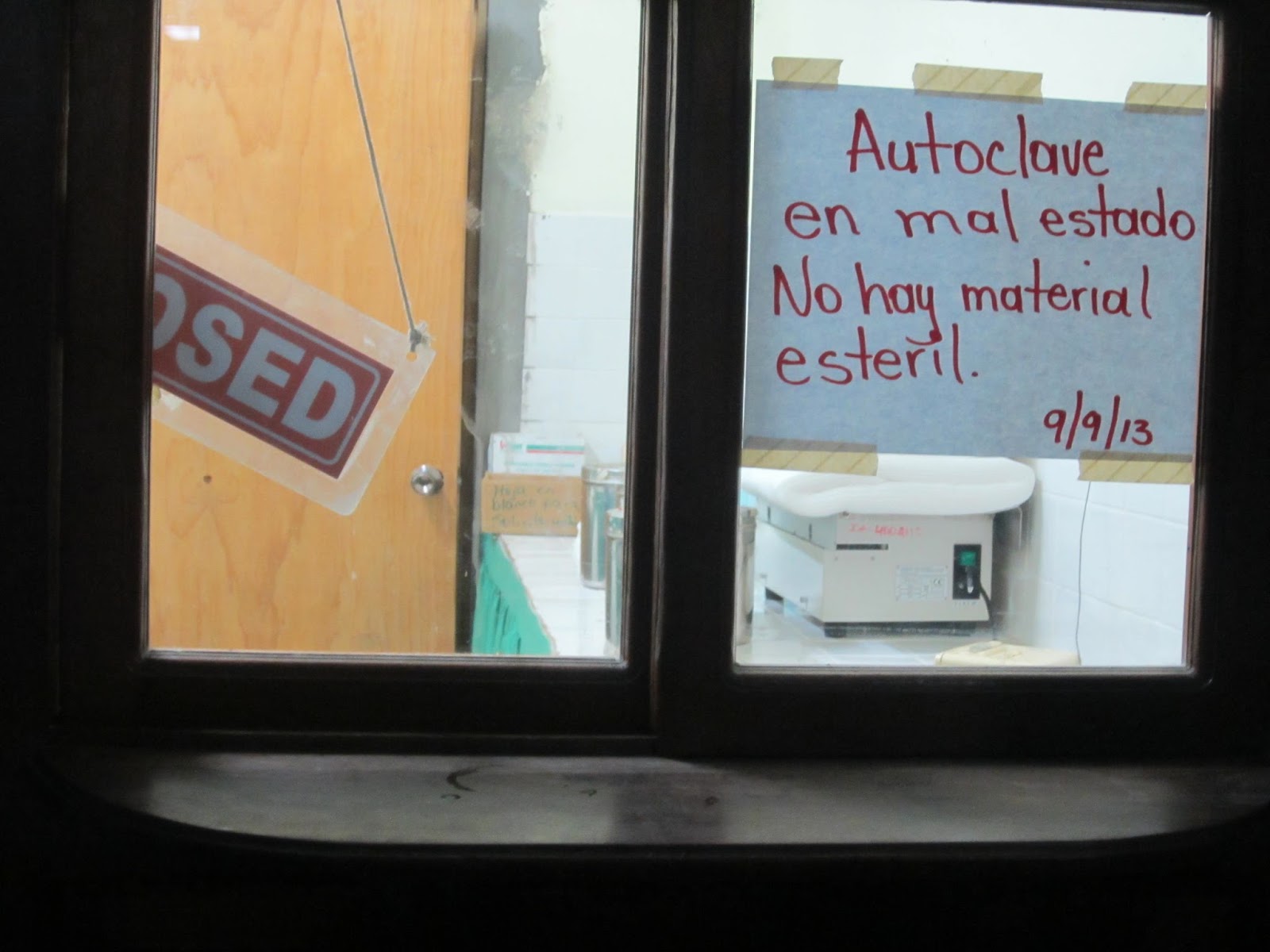
On Thursday and Friday, I sat in on a couple of classes that were given by three nurse educators who came down for Global Healing to look at how they might expand their outreach in the hospital. The classes were for nurses and covered care for diabetes patients, and care for low birth weight babies. One of the educators mentioned that she has seen nurses sit with a baby for an hour without leaving their side to monitor the baby’s health. A Honduran nurse spoke up, saying there is no way they would have to sit with one patient for an hour. Later, the question of hand washing came up – The hospital has few sinks with functioning water and I have yet to see a dispenser for antibacterial gel. The nurses recognize that they don’t always use the best hand washing techniques between every patient, sometimes they don’t make it to the sink, or there is no soap, or whatever. They fully understand the importance of washing their hands (they spend just as much time in nursing learning to wash their hands as we would in the USA—and any nursing student would tell you it’s the first thing you learn), but how can they wash their hands properly when they don’t have soap? Or antibacterial gel?

These are my initial observations. It is hard to see some of these things, and it’s important to see them. But equally (if not more) important is seeing that these professionals want to care for their patients in the best way possible, and they are trying to do so. As far as my role as a volunteer in all of this, I’m not sure what to think exactly, except that I am going to learn a lot. If anyone has any insight, I would love to hear it. All these things have been tumbling around my head all week. Luckily I’ve been able to chat about it with other volunteers, but I’d love to hear what friends and family back home think about this, or experiences they’ve had. 

So yes, it’s been exhausting. But I have been incredibly blessed to be living with an amazing, welcoming family who I have no doubt will take really good care of me while I’m here. They’ve showed me around the island, introduced me to their family, and have made me some amazing food (Doris’ baleadas are AMAZING!!). Sunday was Independence Day here, and this weekend was full of festivities, including several parades.


One week has already been eye opening… it’s going to be an interesting three months.